Check your own house

Eight signs your internal gutters are failing

Internal gutters fail quietly. By the time water shows up inside the house, it has usually been getting in for a while. These are the things you can spot yourself, most of them from the ground, and what each one is telling you.

A concealed gutter runs inside the roof line, so it has no harmless way to fail. When an external gutter blocks, it spills down the outside of the house and somebody notices within a day. When an internal one blocks, the overflow goes into the soffit cavity, down the framing and into the ceiling, and nothing at all appears until the damage is well underway.

That delay is the expensive part. A conversion done on the strength of a rust spot is a straightforward job. The same conversion done after the framing has gone soft means carpentry, lining repairs and redecoration on top. Everything below is worth acting on early rather than watching for another winter.

The eight warning signs

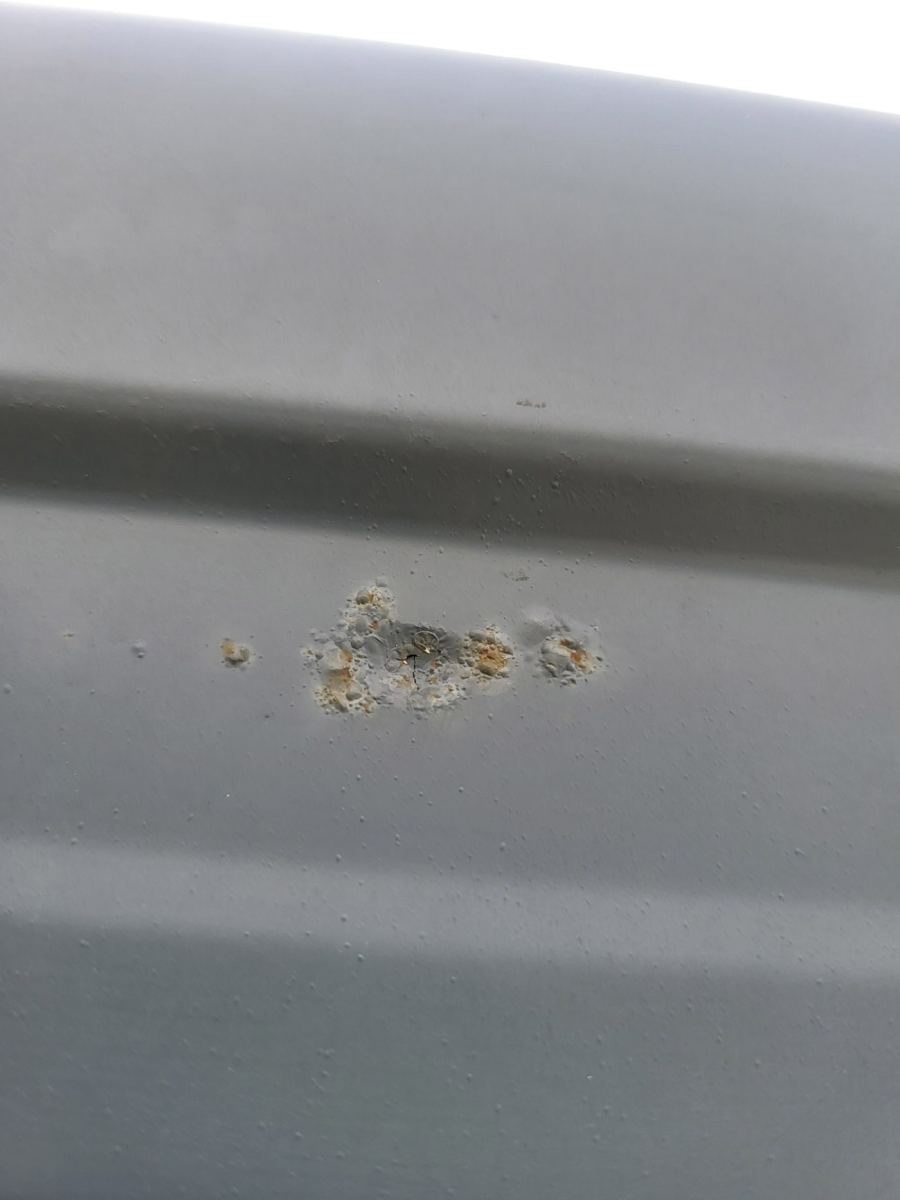
Brown rust spot bleeding through a painted metal fascia

Sign 01

Brown rust spots bleeding through the fascia

A single brown stain on an otherwise clean fascia is corrosion working outward from the inside. By the time it shows on the painted face, the steel behind it has already been wet for a long time. This is the earliest sign most owners can spot from the ground.

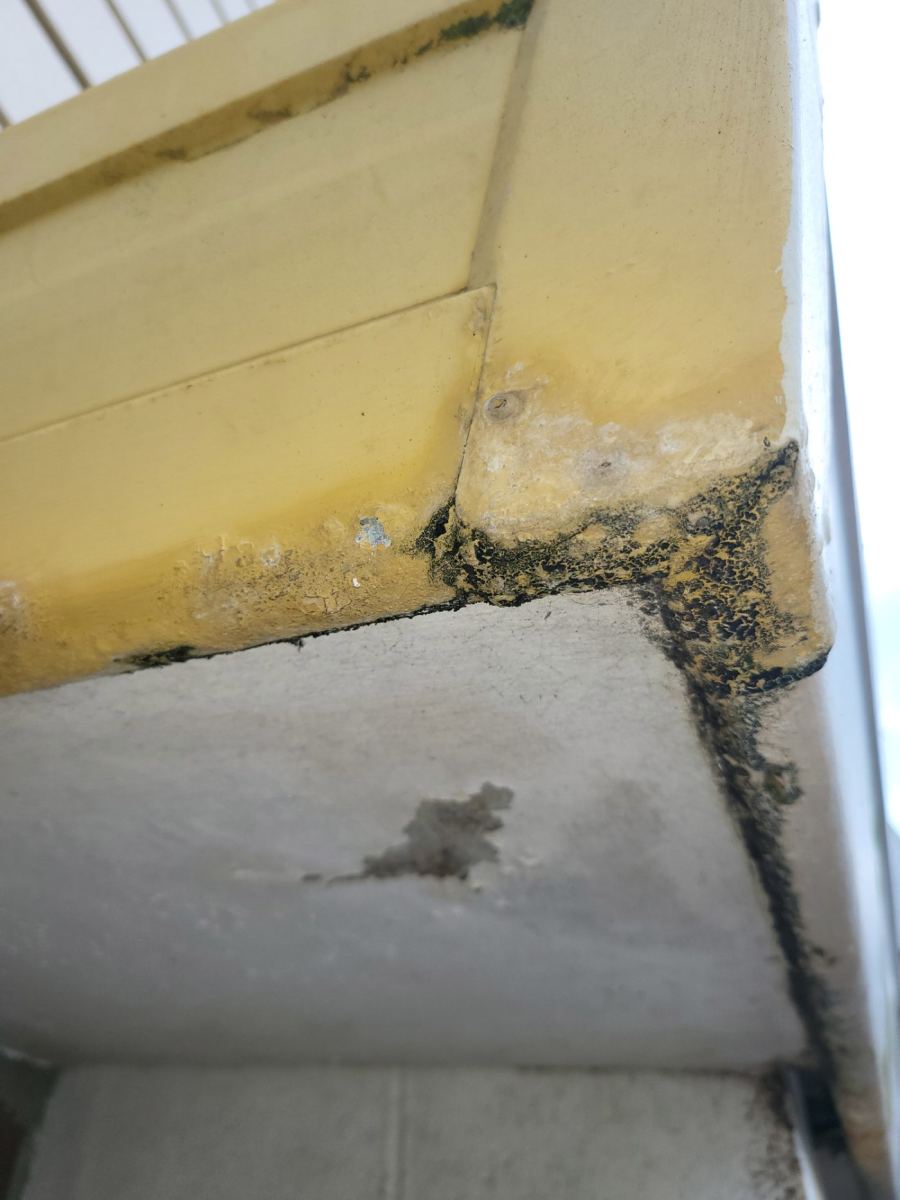
Black mould spreading across a soffit lining below a failing internal gutter

Sign 02

Black mould on the soffit lining

Soffit linings should stay dry. Mould in the corners or along the wall junction means moisture is sitting in the cavity above, and the only thing putting it there is the gutter. Painting over it hides the symptom for a season.

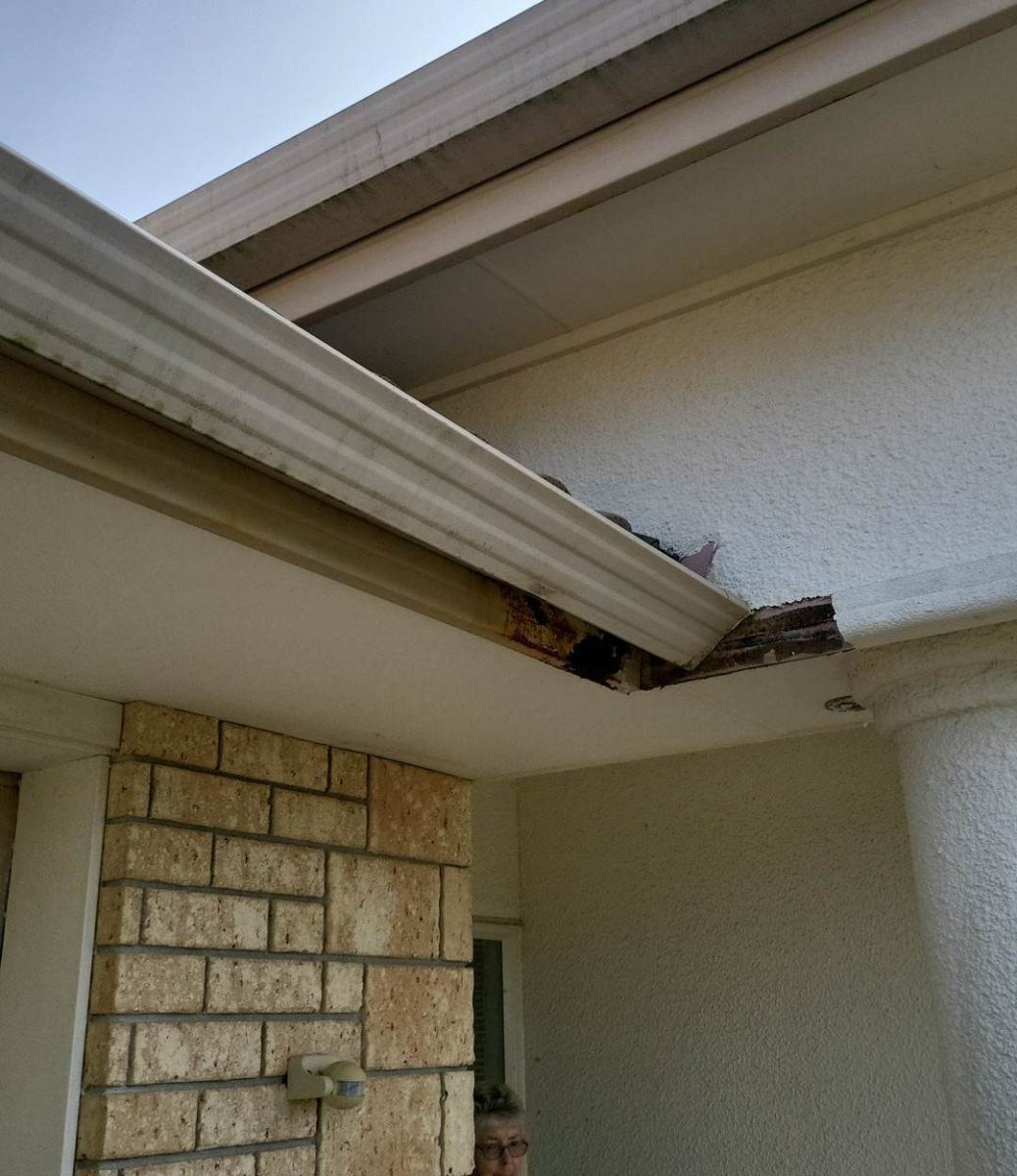
Water damage showing through a fascia and soffit at a wall junction

Sign 03

Water running down windows or out of internal corners

Water appearing at the top of a window, or weeping out of a room corner during heavy rain, is often blamed on condensation or a leaking window seal. On a house with internal gutters it is usually the gutter overflowing into the wall.

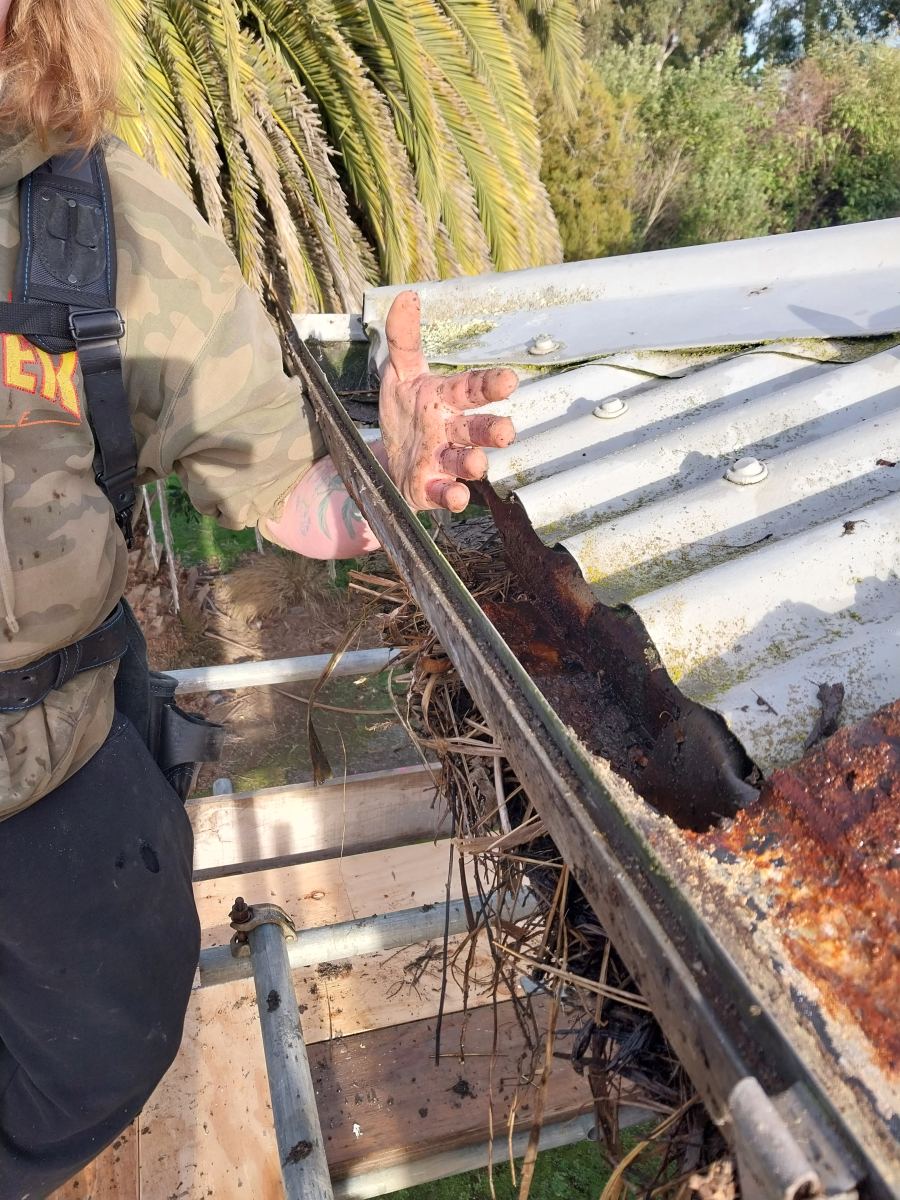
Roofer lifting the edge of an internal gutter that has corroded right through

Sign 04

Rust holes right through the gutter

Once you can see daylight through the base of the gutter, every millimetre of rain that lands on that roof face is going straight into the structure. Patching buys months, not years, because the surrounding steel is the same age.

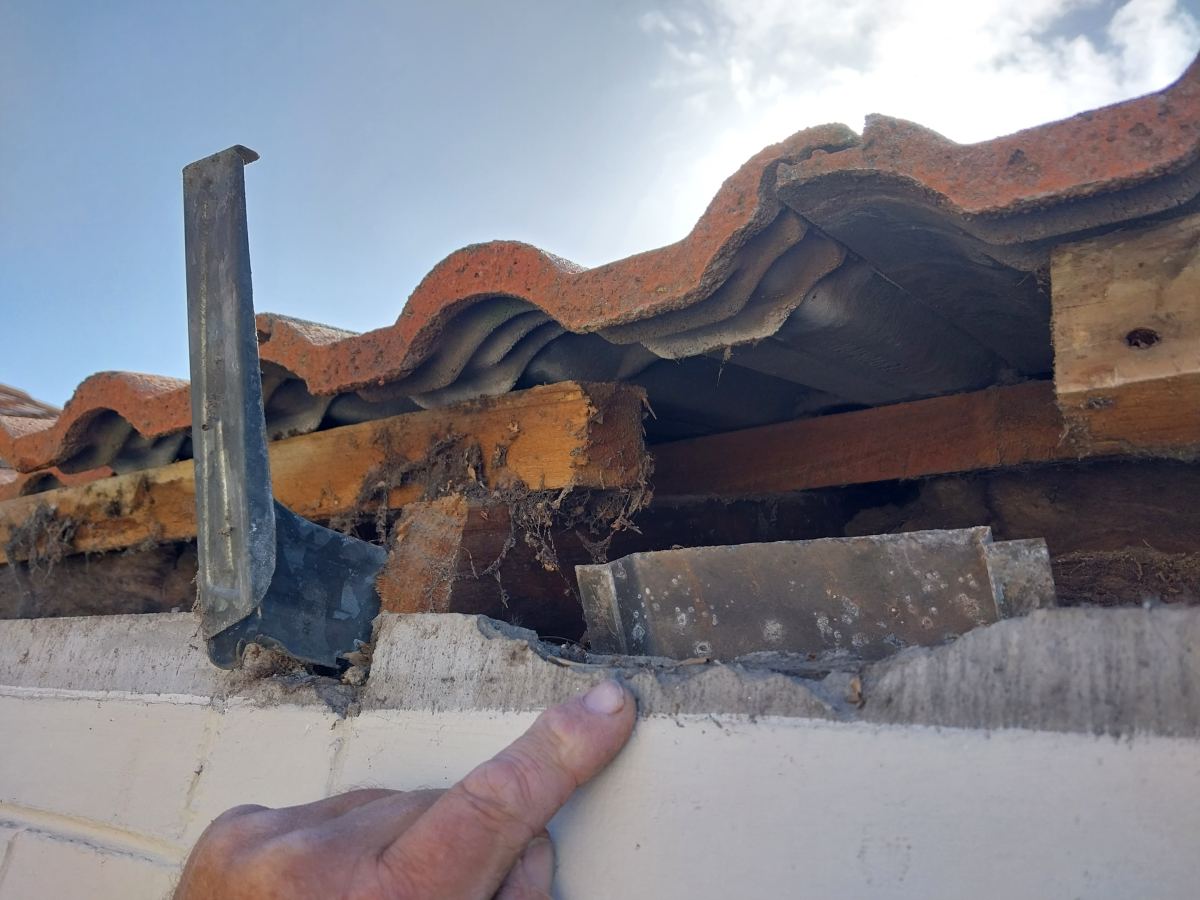
Rotted timber and packed debris exposed under roof tiles once the internal gutter was removed

Sign 05

Rot in the framing behind the gutter

This is what a leak looks like after a few years of being ignored. At this point the job is no longer a gutter conversion: the framing and lining have to be made good first, which is exactly the cost we are trying to help people avoid.

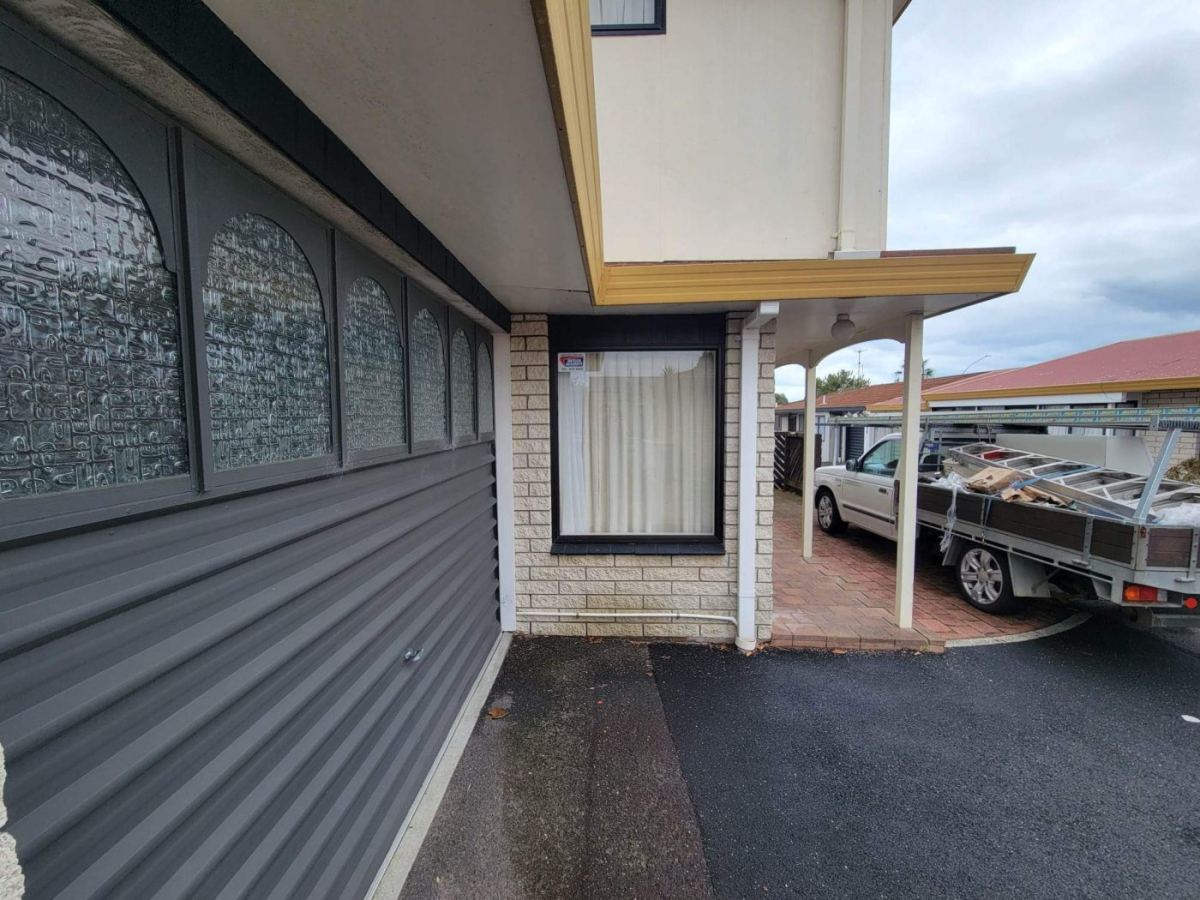
Sagging soffit lining above a corner window on a plastered home

Sign 06

A sagging soffit, especially at a corner window

Corner windows and wide garage openings have the least structural support outside the wall line, so they sag first when the timber above them gets wet. A dipping or bellied soffit is a structural symptom, not a cosmetic one.

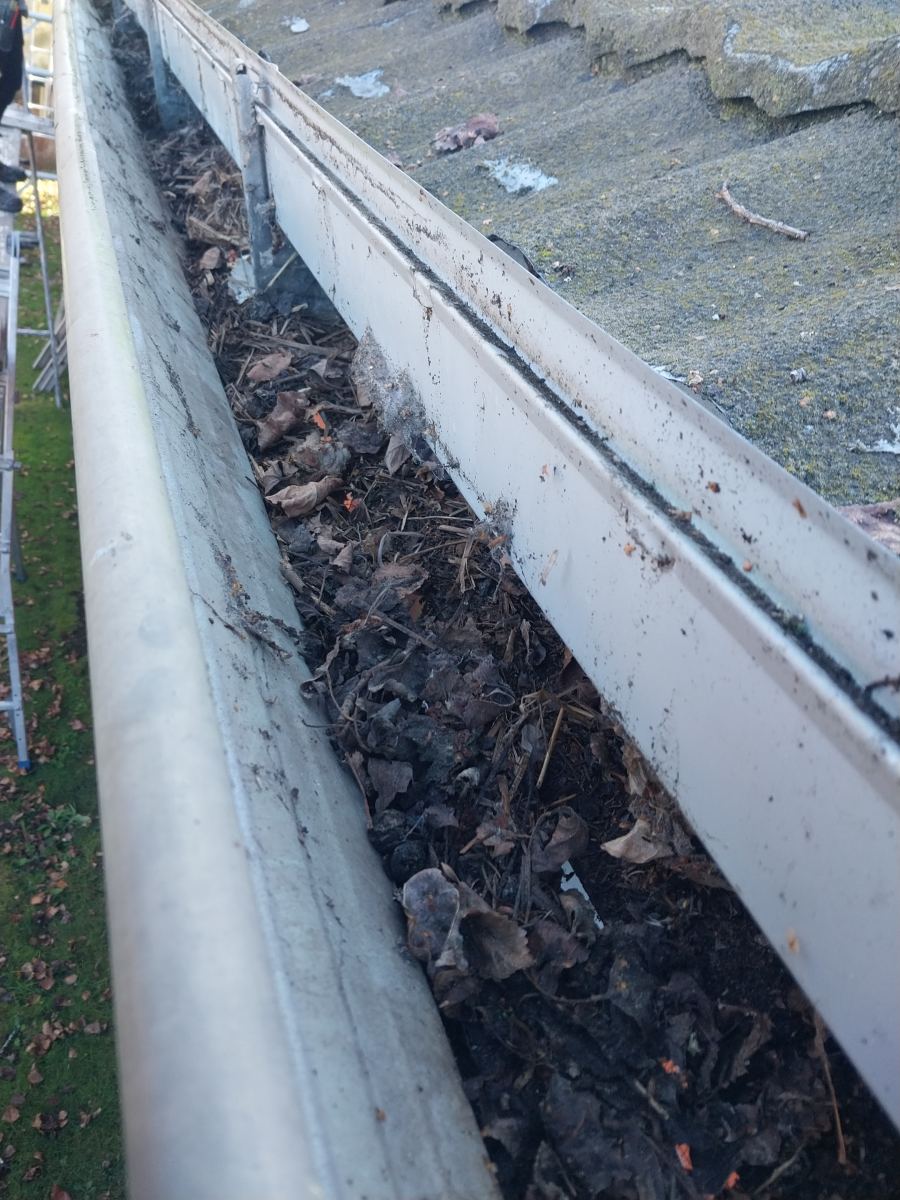
Internal gutter run packed end to end with wet leaf litter

Sign 07

The gutter is full, and staying full

Internal gutters are awkward to reach and easy to forget, so debris builds until the outlets choke. A blocked internal gutter has nowhere to spill except inward. If you have never had yours cleared, assume it needs it.

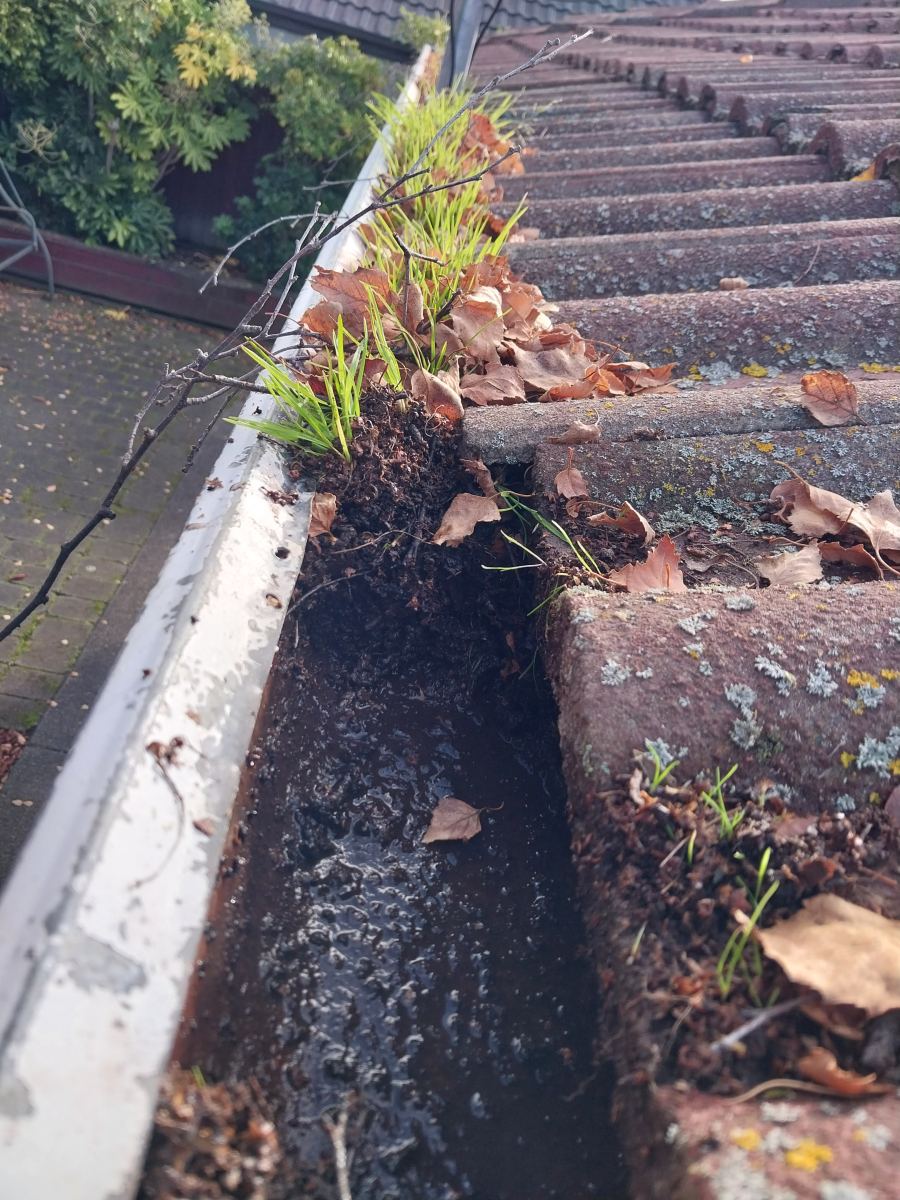
Grass growing out of a silted-up internal gutter beside roof tiles

Sign 08

Plants growing out of the roofline

A seedling in the gutter means there is enough trapped soil and standing water up there to sustain it. Nothing communicates the state of a roofline more plainly, and it is visible from the footpath.

If it keeps going

How a gutter becomes a building job

Water that gets past a failed internal gutter does not stop at the gutter. It follows the framing. The sequence is predictable, and each step costs more than the one before it.

How RIGS fixes it
  1. Year one

    Debris builds at the outlets. Water sits in the channel instead of draining, and the protective coating starts to give up under it.

  2. Year two to three

    Corrosion pinholes the base of the gutter. Small amounts of water begin tracking into the soffit cavity on every heavy fall.

  3. Year three to five

    Soffit linings mark and mould. Paint bubbles on the fascia. Rust bleeds through where the steel is thinnest.

  4. Year five onward

    Framing behind the gutter softens. Soffits sag over corner windows and garage openings, and stains appear on interior walls and ceilings.

  5. Eventually

    The job is no longer a gutter conversion. Framing, linings, insulation and decorating all have to be made good before the new system goes on.

Before you sign

Buying a house with internal gutters

Internal gutters are not a reason to walk away from a house. They are a reason to look properly and price the fix before you make an offer. A building report will usually note the gutter type, but it will not always tell you how much life is left in it, because the inside of the channel is the part that fails first.

These are the places to check hardest. They are the spots with the least structural support outside the wall line, so they show trouble before anywhere else does.

  • Corner windows, which have very little above them to carry a wet soffit and sag early
  • Internal and external corners of the roofline, where two gutter runs meet and debris collects
  • Large overhangs, where any dip in the soffit line is visible from the footpath
  • Wide openings such as garage doors, which span too far to hide a sagging lining
  • Fascia-to-wall junctions with stopends, a common point for water to back up
  • Any section with no overhang or soffit support outside the wall line at all

We are happy to look at a house you are considering and give you a written figure for a conversion, so you can factor it into what you offer. There is no charge and no obligation to use us afterwards.

Questions about gutter failure

My gutters have never leaked. Do I still need to worry?

An internal gutter that has never visibly leaked can still be corroding. The failure happens inside the roofline and the water tracks into the wall cavity, so the first thing many owners see is a stain on an interior wall or a musty smell in a room, months after the gutter actually gave way. If your house has internal gutters and they have never been inspected, that is worth doing regardless of symptoms.

How often should internal gutters be cleared?

At least once a year, and twice if the house sits under deciduous trees or pines. The trouble is that internal gutters are genuinely awkward and often unsafe to reach, which is why so many go a decade without being touched. Clearing them slows the problem down but does not fix the underlying design.

Is there anything I can do right now to limit the damage?

There is a recognised stop-gap: 70mm holes cut directly behind the existing fascia through the soffit lining, which gives overflowing water a controlled path out of the cavity instead of into the wall. It is a holding measure, not a repair. Important: soffit linings installed before 1988 may contain asbestos, so do not cut or drill them yourself. Get the material identified first.

We are buying a house. What should we check?

Look hardest at the places with the least structural support outside the wall line: corner windows, wide garage openings, internal and external corners, large overhangs, and any point where the fascia runs into a wall with a stopend. Those are the spots that sag or stain first. A soffit that dips, a fascia with a brown bleed, or fresh paint on only one section of soffit are all worth a question.

Can the damage be repaired without replacing the gutter?

Rotted framing and lining can be made good, and we do that work. But repairing the damage while leaving the internal gutter in place means you will be back in the same position in a few years. Where the gutter is the cause, the sensible order is to convert the gutter first, then repair what the water has already spoiled.

Free quote

Get a price on your internal gutter inspection

Fill in the form and Nigel will call you to arrange a free site visit. You deal with the roofer, not a salesperson, and the quote is honest, itemised and obligation-free.

Prefer to talk it through?

027 209 8145

Free site visit, no obligation

Free site visit, free no-obligation quote

Protect your biggest asset.

Talk directly to the tradesman who will be on your roof. Nigel visits, measures and talks you through the options honestly, with no sales layer in between.